

Ever feel like your day just disappears? You sit down with a to-do list and all the good intentions in the world, but by 5 PM, you’re wondering where the time went. Emails, messages, random distractions—and suddenly, it’s bedtime.
If that sounds familiar, you’re not alone. In a world driven by constant notifications and multitasking, deep focus has become a rare superpower. But what if there was a way to consistently tap into a state where time slows down, creativity flows, and productivity skyrockets?
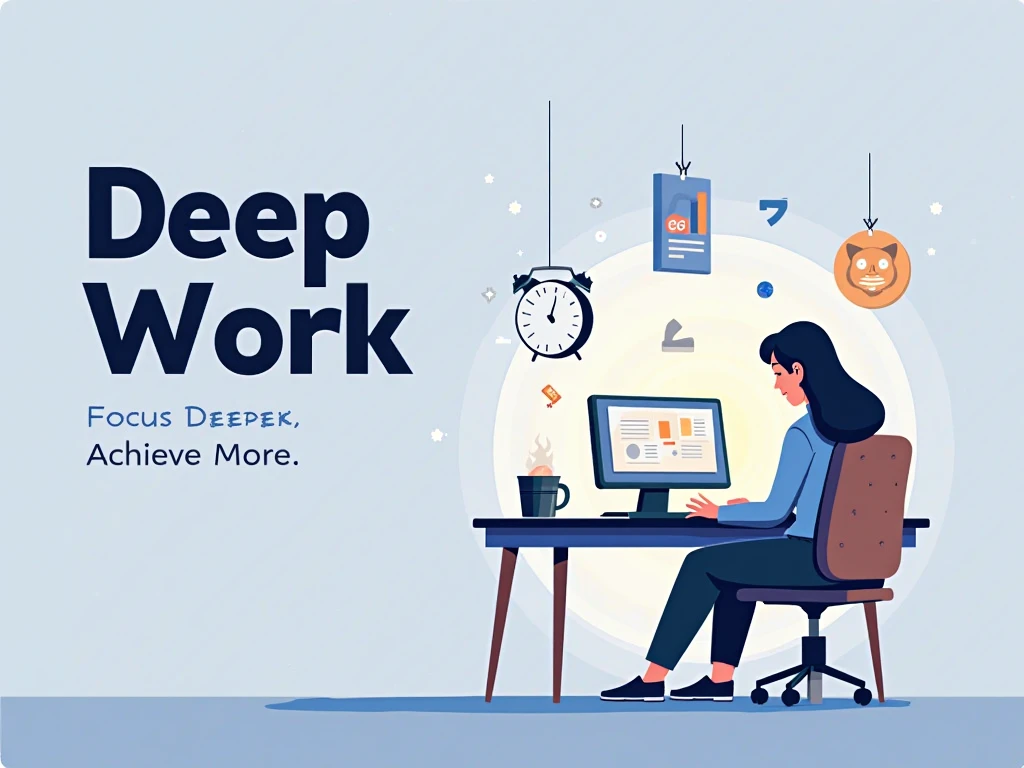
Enter Deep Work & Flow—a powerful pairing that helps you regain control of your attention and produce work that actually matters.
What is Deep Work?

Coined by author and computer science professor Cal Newport, Deep Work refers to the ability to focus without distraction on cognitively demanding tasks. It’s the opposite of shallow work—things like checking emails, scrolling social media, or sitting in passive meetings.
Deep work is:
Writing an in-depth report
Coding a complex feature
Crafting a strategic plan
Designing a presentation from scratch
In short, it’s the work that moves the needle—the kind of work you were hired for, but rarely get enough time to do.
According to Newport, deep work is what separates successful professionals from the rest in a knowledge economy. It’s not just about working harder—it’s about working smarter and deeper.
What is Flow?

Now let’s talk about the other half of the equation: Flow.
Flow is a term popularized by psychologist Mihaly Csikszentmihalyi (don’t worry, we can’t pronounce it either). It describes that magical state where:
You lose track of time
You’re completely immersed in what you’re doing
Everything feels effortless and intuitive
It’s what athletes call “being in the zone” or artists call “creative flow.” Flow happens when your skills are perfectly matched to the challenge at hand, and there are no distractions pulling you away.
Imagine coding for three hours straight without checking your phone—or writing a full blog post without noticing the time. That’s Flow. And when Deep Work sets the stage, Flow walks in and takes over.
Why Deep Work & Flow Are Better Together
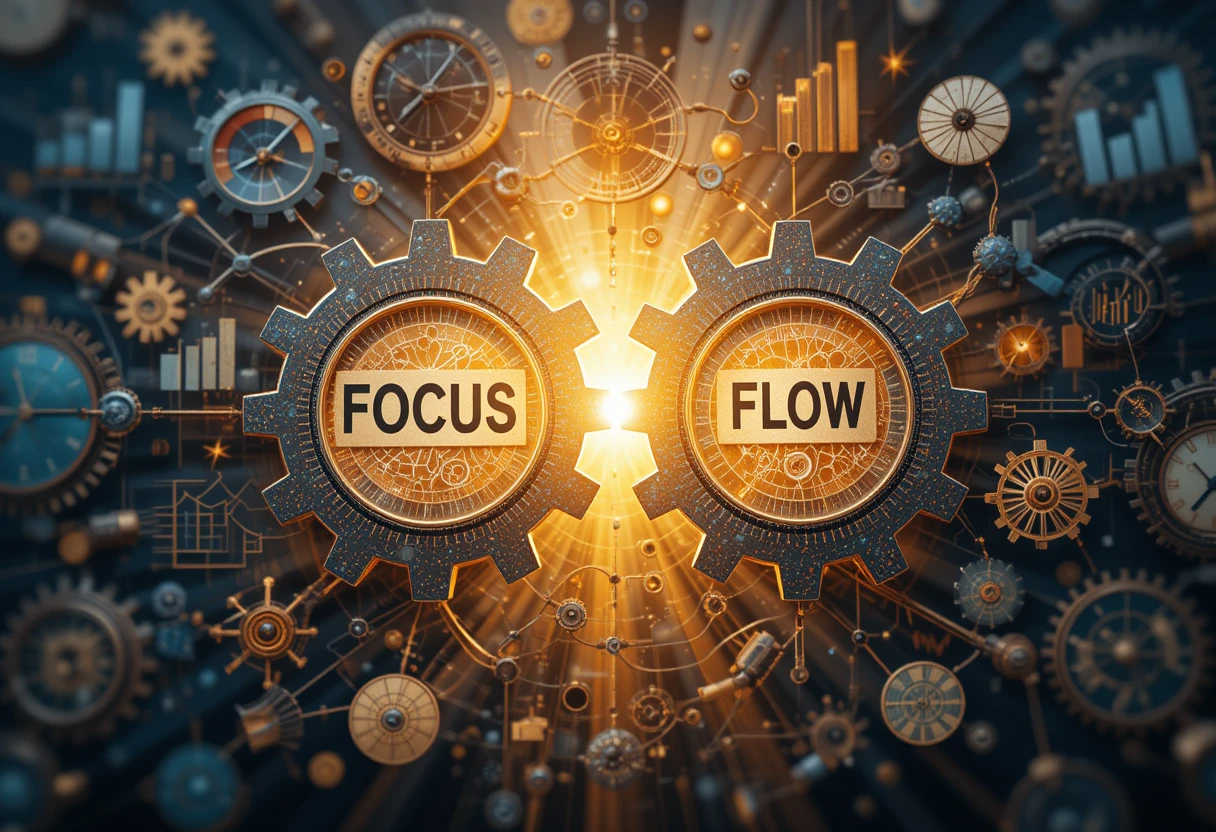
While they’re distinct concepts, Deep Work & Flow complement each other perfectly.
Deep Work provides the environment: no distractions, no multitasking, just focused effort. Flow is the state your brain enters once you’re fully engaged in that focused effort.
Think of it like this:
Deep Work is the door.
Flow is what’s on the other side.
When practiced together, they unlock:
Massive productivity
Higher quality output
Greater job satisfaction
A sense of purpose and progress
You stop just “getting things done” and start doing meaningful work.
How to Build a Deep Work Routine That Triggers Flow
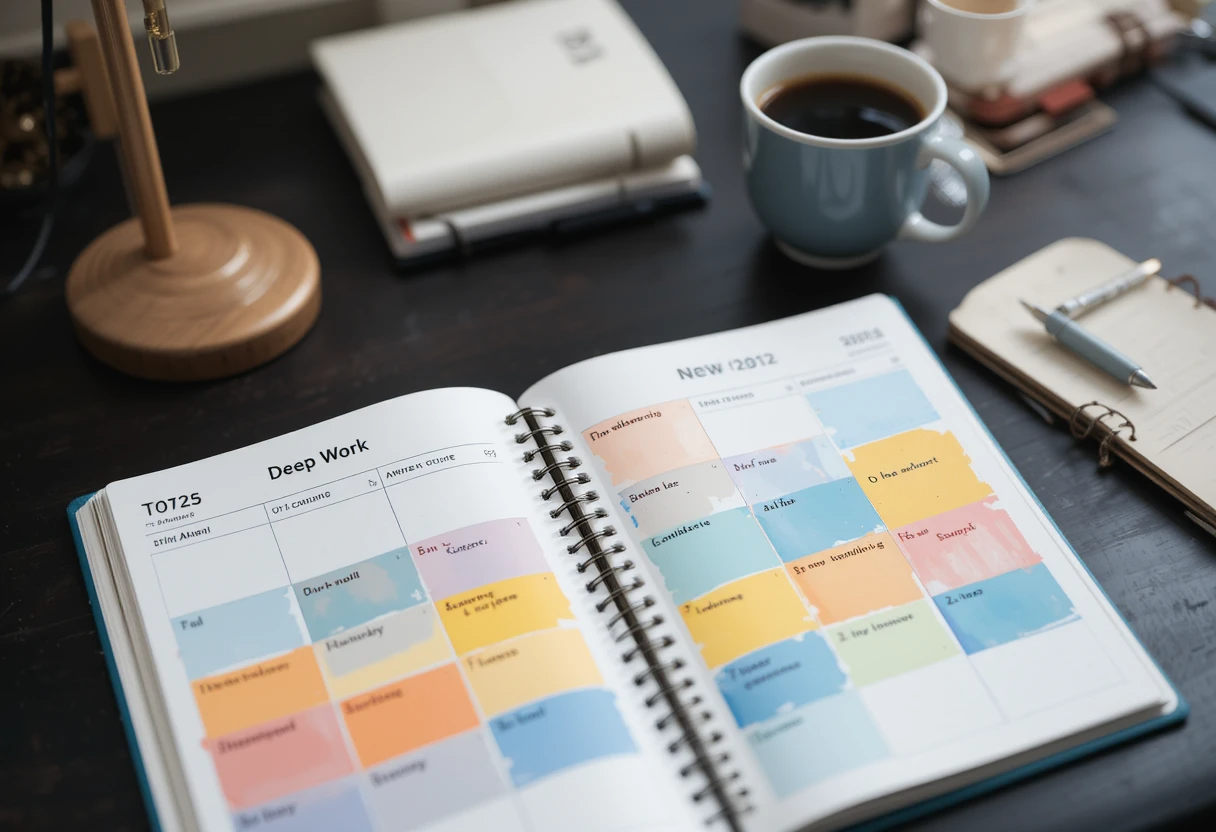
Let’s get tactical. Want to bring Deep Work & Flow into your daily life? Here’s a simple framework:
1. Designate Deep Work Blocks
Pick your peak energy hours (for most people, it’s mid-morning) and block off 60–90 minutes. During this time:
Turn off notifications
Put your phone in another room
Use website blockers if needed
Protect this time like a sacred appointment—with yourself.
2. Set a Clear Goal
Don’t just “work.” Have a specific outcome in mind:
Finish writing 500 words
Solve a design challenge
Create a proposal draft
A clear goal gives your mind direction, which makes entering Flow much easier.
3. Use Rituals to Prime Your Brain
Rituals signal your brain it’s time to focus. This could be:
Making coffee
Playing ambient music
Wearing noise-canceling headphones
Opening a blank doc titled “Deep Work Only”
The key is consistency.
4. Avoid Task Switching
Even a quick glance at your inbox or a Slack message kills momentum. Multitasking is the enemy of Flow. If something unrelated pops into your head, jot it down and keep moving.
5. Reflect Afterward
Once your session is done, take 2–3 minutes to write down:
What you accomplished
What worked
What distracted you (if anything)
This helps you optimize for future Deep Work & Flow sessions.
Real-World Case: How Deep Work Transformed a Freelance Writer’s Career
Take Jess, a freelance content writer from Seattle. For years, she struggled with procrastination, bouncing between tabs and responding to client messages the second they came in.
After reading about Deep Work & Flow, she made a few changes:
Scheduled two 90-minute writing blocks every morning
Put her phone in the kitchen during work hours
Used a Pomodoro timer (25 minutes on, 5 minutes off) to ease into focus
Within a month:
Her writing speed doubled
Clients noticed better quality and hired her for bigger projects
She felt less anxious and more in control of her time
Her secret? She stopped chasing productivity hacks and focused on creating the right environment for Deep Work & Flow.
Common Myths About Deep Work & Flow
Let’s bust a few myths that hold people back:
“I don’t have time for Deep Work.”
You do—you’re just spending it on shallow work. Even 1–2 focused hours a day can be game-changing.
“Flow only happens to creative people.”
Not true. Engineers, marketers, even accountants experience flow. The key is matching the task to your skill level and removing distractions.
“I need to wait for motivation.”
Motivation follows action. Start with a small focus session. Flow comes once you’re already in motion.
Tools That Can Help
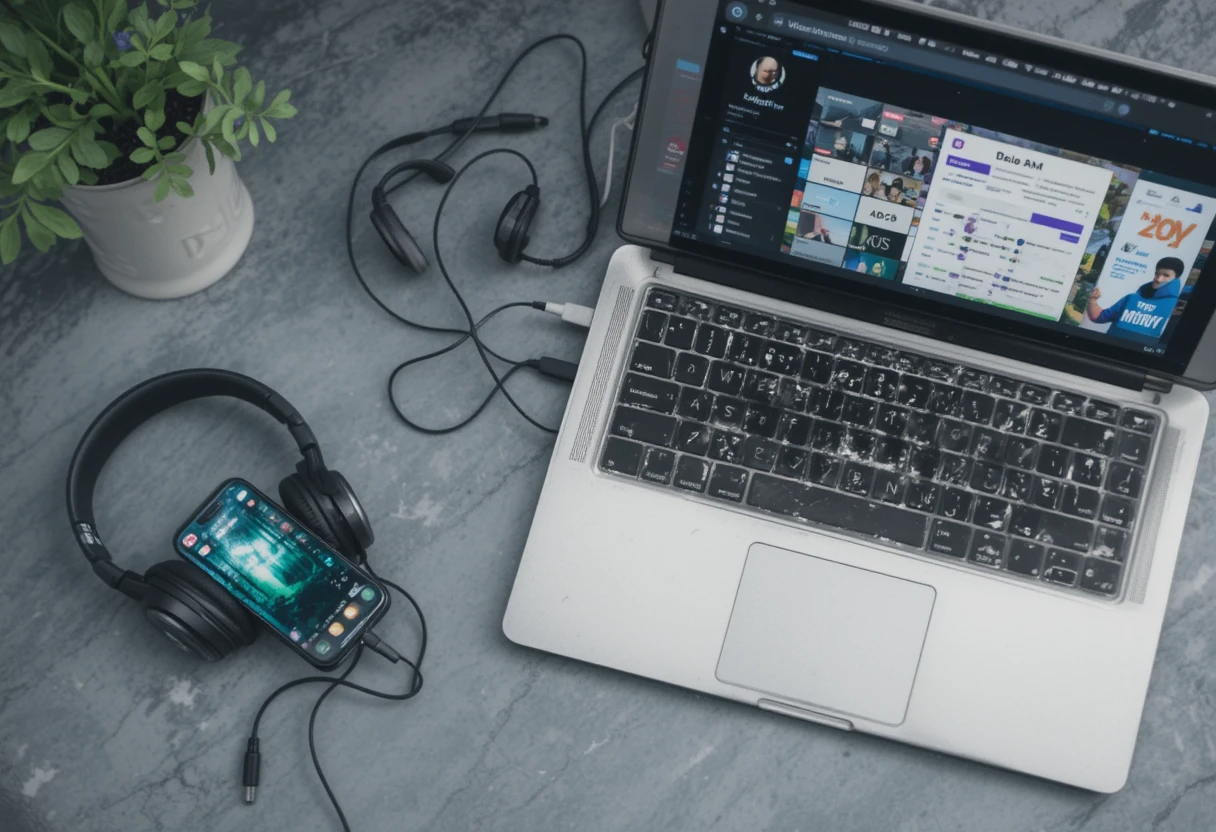
Here are a few tools that make Deep Work & Flow easier to build:
Forest App: Stay off your phone by growing a virtual tree.
Notion or Obsidian: Organize tasks and ideas in one place.
Freedom or Cold Turkey: Block websites and apps.
Brain.fm or Endel: Soundscapes that promote focus and reduce distraction.
Time Block Calendar (Google Calendar): Visually plan when you’ll work deeply.
But remember, tools won’t save you without intention. Use them as support—not a crutch.
Make Room for Deep Work & Flow
In a world screaming for your attention, Deep Work & Flow are quiet revolutions. They require patience, practice, and protection—but they pay off in ways that shallow productivity never will.
Start small. Pick one time block tomorrow. Commit to it. Remove distractions. Chase depth, not speed.
Because once you’ve tasted true focus, you’ll wonder how you ever worked any other way.